
When a business can turn away a service dog in Florida
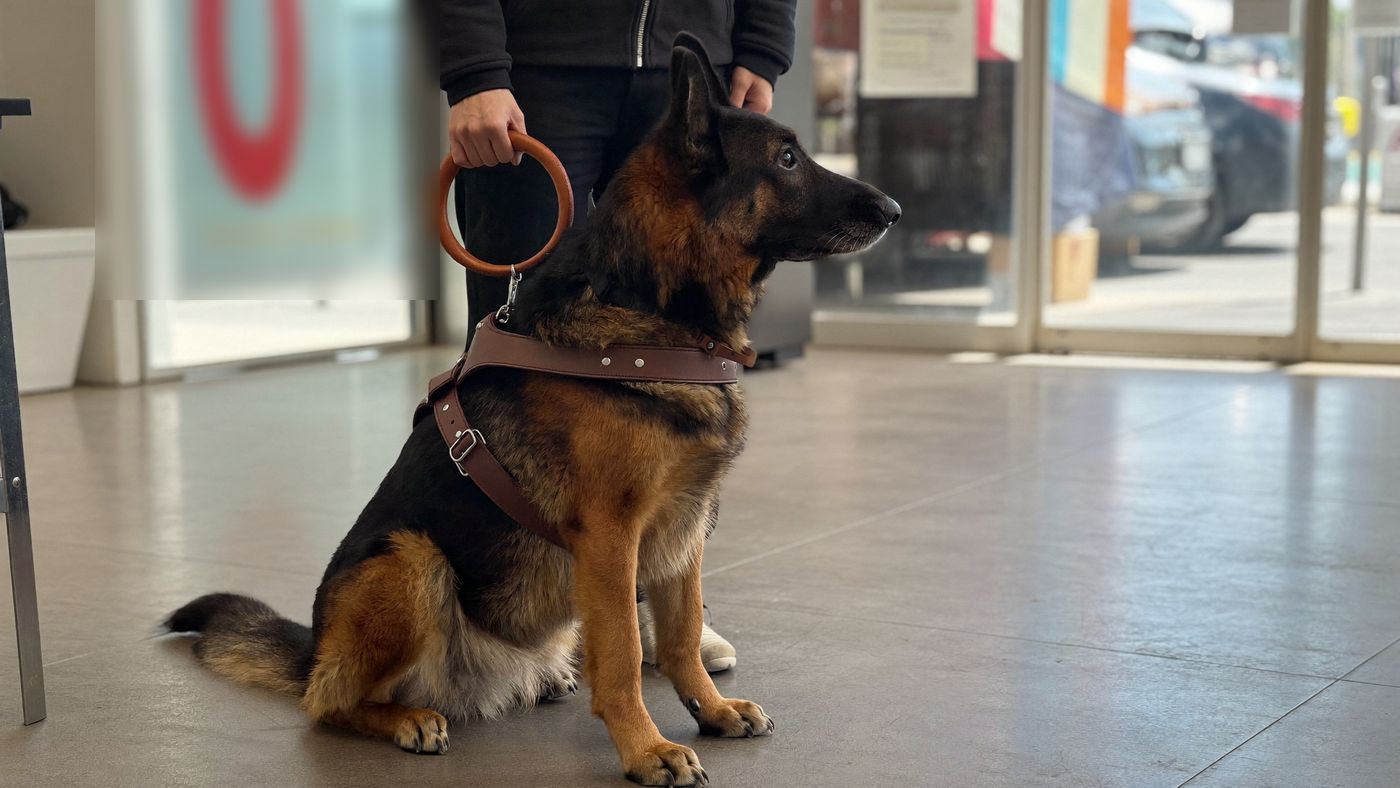
A manager asks for paperwork he has no right to see. A handler assumes the vest excuses the dog from behaving. Most Florida access disputes over service dogs start at one of those two points, not at a gap in the law. The federal rule and the state statute are both narrower than either side expects, and they mostly agree with each other.
Under 28 CFR 36.302(c)(7), a person with a disability may be accompanied by a service animal in all areas of a public accommodation where the public, customers, clients or invitees are allowed to go. Fla. Stat. 413.08(3) repeats that right in state language. Food businesses are included: ada.gov says establishments that sell or prepare food must generally allow service animals in public areas even where state or local health codes prohibit animals.
The two federal reasons
28 CFR 36.302(c)(2) gives a business exactly two grounds to ask that a service animal be removed. The animal is out of control and the handler does not take effective action to control it, or the animal is not housebroken.
That is the entire list, and removal takes two steps. DOJ FAQ Q28 says staff may request removal if the animal is out of control and the handler does not take effective action, so the handler gets a chance to fix the situation first. When removal is proper, 28 CFR 36.302(c)(3) requires the business to give the person the opportunity to obtain goods and services without the animal on the premises. Sending someone away entirely is a second violation on top of the first.
Florida adds a third
Fla. Stat. 413.08(3)(f) lists out of control, not housebroken, and behavior that poses a direct threat to the health and safety of others. If a dog is removed as a direct threat, the statute still requires the business to offer continued access without the animal.
Direct threat is a demanding standard. 28 CFR 36.104 defines it as a significant risk that cannot be eliminated by modifying policies or practices, and 28 CFR 36.208(b) requires an individualized assessment of the nature, duration and severity of the risk and the probability that injury will actually occur. Breed does not qualify. DOJ FAQ Q24 says a municipality with a breed ban must make an exception for a service animal of a prohibited breed unless that specific dog is a direct threat, and businesses may not exclude a dog based on fears or generalizations about how a breed might behave.
What control actually looks like
Both 28 CFR 36.302(c)(4) and Fla. Stat. 413.08(3)(a) require a harness, leash or tether, unless the handler cannot use one because of a disability or the tether would interfere with the dog's work, in which case voice control, signals or other effective means must keep the dog under control.
DOJ draws the line by behavior. A dog barking repeatedly in a theater, library or other quiet place is out of control. A single bark, or barking because someone provoked the dog, is not (FAQ Q27). A wheelchair user may work a dog on a long retractable leash to retrieve items but may not let the dog wander away from her. A veteran with PTSD may work a dog off leash while it checks an unfamiliar space, and leash it the rest of the time. FAQ Q29 is blunt about the limit: a hotel guest may not leave the dog alone in the room, because the dog must be under the handler's control at all times.
Care is the handler's job too. 28 CFR 36.302(c)(5) and Fla. Stat. 413.08(3)(e) say the business is not responsible for care or supervision, food, a special location, or help removing excrement.
Can staff ask what my disability is?
No. Under 28 CFR 36.302(c)(6) and Fla. Stat. 413.08(3)(b) they may ask only two things: whether the dog is required because of a disability, and what work or tasks it has been trained to perform. No documentation, no demonstration.
Does an online registration or certificate help?
It carries no weight. DOJ FAQ Q17 says those documents convey no ADA rights and the Department of Justice does not recognize them, and FAQ Q20 says mandatory registration of service animals is not permissible.
Do [emotional support animal](/blog/dog-laws/service-dog-vs-emotional-support-animal-florida)s get the same access?
Not in public accommodations. Fla. Stat. 413.08(1)(d) excludes emotional support, comfort and companionship from the definition of work or tasks, and limits the term to a dog or miniature horse for access purposes. Housing runs on different rules under the Fair Housing Act.
Can a business charge a pet deposit?
No. Fla. Stat. 413.08(3)(c) bars a deposit or surcharge even where one is routine for pets, and 28 CFR 36.302(c)(8) matches it. Damage the dog actually causes is a separate question, governed by Fla. Stat. 413.08(3)(d).
What a business may never do
Allergies and fear of dogs are not valid reasons to deny service. That appears both on ada.gov and directly in Fla. Stat. 413.08(3)(f). The fix is separation within the space: different seats, or different rooms.
Customers using service animals also cannot be isolated from other patrons, treated less favorably, or charged fees other patrons do not pay. DOJ FAQ Q11 applies that to lodging: a guest with a service dog must get the same shot at any available room and may not be limited to pet-friendly rooms. On damage, Fla. Stat. 413.08(3)(d) allows recovery only where charging nondisabled customers for pet damage is the regular policy and practice, and FAQ Q12 forbids charging for cleaning shed hair or dander.
The narrow exceptions
Access can be limited where admitting the dog would fundamentally alter the service (28 CFR 36.302(a), FAQ Q25). DOJ stresses that in most settings the presence of a service animal will not cause a fundamental alteration, and its examples are specific: a designated dorm area set aside for students allergic to dander, and zoo areas holding the natural prey or predators of dogs, with no restriction on the rest of the zoo. Hospitals follow the same logic. ada.gov says exclusion from patient rooms, clinics, cafeterias or exam rooms is usually improper, while operating rooms and burn units may justify it.
Smaller limits exist without a denial of access. The dog stays on the floor or is carried in a store, does not sit on a chair or eat at the table, and may be on the pool deck but not in the pool. FAQ Q13 describes a rare case where a crowded small restaurant can fit only one of two service dogs and staff may ask that the second wait outside.
Private clubs and religious organizations sit outside ADA Title III entirely under 42 U.S.C. 12187 and 28 CFR 36.102(e). The exemptions have edges: a business renting space from a congregation is not exempt unless it is itself a religious entity, and a club loses the exemption for facilities opened to nonmembers. Florida's statute defines public accommodation through places to which the general public is invited and contains no religious exemption in its text, so a church's status under state law is a separate question worth checking.
When it goes wrong
Florida makes both sides answerable. Fla. Stat. 413.08(4) makes denying or interfering with access a second degree misdemeanor plus 30 hours of community service for an organization serving people with disabilities, to be completed within six months. Fla. Stat. 413.08(9) applies the identical penalty to a person who knowingly and willfully misrepresents herself or himself as using or training a service animal. A second degree misdemeanor carries up to 60 days in jail under Fla. Stat. 775.082(4)(b) and up to $500 under Fla. Stat. 775.083(1)(e).
Someone illegally denied access may file a complaint with the U.S. Department of Justice or bring a private federal lawsuit (FAQ Q30). The ADA Information Line is 800-514-0301, TTY 1-833-610-1264.
This article is general information about how these rules are written, not legal advice, and no article can account for the facts of a particular incident. Anyone facing a real dispute, on either side of the counter, should talk to a Florida attorney or contact the agencies named above.


Discussion
Questions get answered here. Reading is open to everyone.
Every comment is read by an automatic check before it appears. Phone numbers, emails and offers of pet care go to a moderator instead of the page.
Sign in to join the discussion. Reading is open to everyone; posting, replying and voting need an account, which keeps the comments answerable to a real person. Sign in or create an account
- Nobody has said anything yet. If the article left a question open, ask it here and we will answer.