
Joining a K-9 unit in Florida with your own dog
· 57 views
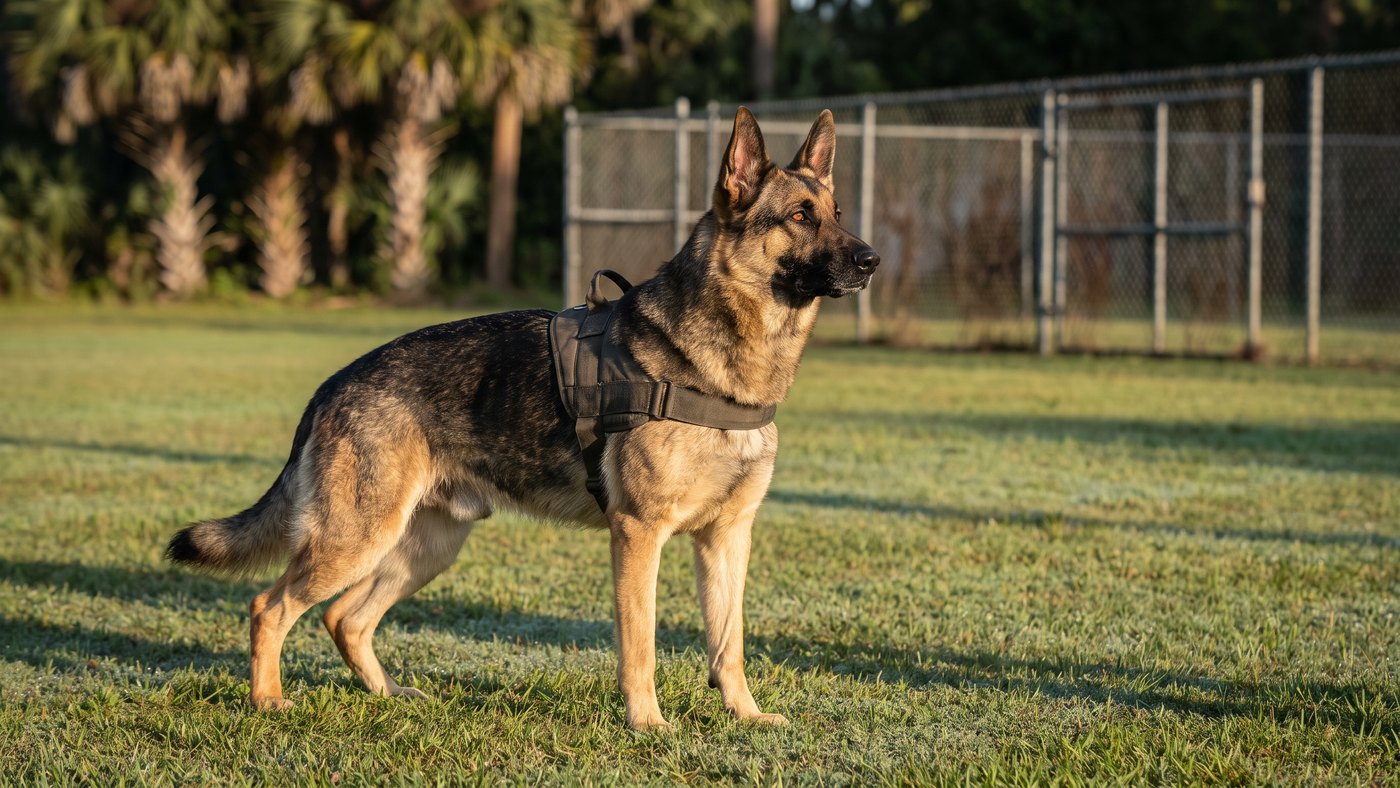
The question arrives in our inbox in almost the same words every time. I am fit, my shepherd is exceptional, we train together every day, and we want to do this for real. How do the two of us get into a K-9 unit in Florida?
The honest answer has a hard part and a useful part, and most articles on this subject skip the hard part because it disappoints people. We are going to start with it, because everything practical follows from understanding it correctly.
You will not be bringing your dog
Police K-9s are the property of the agency. The department buys the dog, trains it, insures it, and holds title to it. That is not a formality and it is not snobbery about your dog's quality.
It is liability. A police dog is a use-of-force instrument. Every deployment can end in a lawsuit, and in that lawsuit the agency has to be able to document the dog's origin, its temperament testing, its training records, its certification history and its handler's qualification, all of it under a chain of custody the agency controls. A privately owned animal with a private training history is a hole in that chain, and no risk manager signs off on it.
There are narrow exceptions. Some small agencies and some volunteer programs work with handler-owned dogs under a formal written agreement. They exist, they are not the norm, and they are not something you can plan a career around.
So the accurate way to frame your ambition is this: you are applying to become a K-9 handler. The dog is assigned to you. For many handlers that dog becomes the animal of their life. It is simply not the one currently asleep on your sofa.
The Florida path, in order
You become a certified law enforcement officer first. There is no route into a K-9 unit that skips this, and it takes as long as it takes.
Florida runs officer certification through the Criminal Justice Standards and Training Commission at FDLE. The sequence:
Complete a Basic Recruit Training Program at a Commission-certified training school. These are in person. There is no online version, and any program advertising one is not the thing you need.
Pass the State Officer Certification Examination. You get three attempts. Your training stays valid for four years from the date you started it, so if you have not passed the exam and been hired within that window, you repeat the academy.
Get hired and cleared. Fingerprints processed through FDLE and the FBI, a background investigation including drug testing, a physical examination by a licensed physician, and the CJSTC-68 affidavit.
Requirements vary between agencies on top of the state minimum, so read the specific department's posting rather than a general guide. That includes ours in Palm Beach County, and the sheriff's offices and municipal departments in Broward.
Then you wait, and then you compete
K-9 is a specialized assignment. Openings are announced internally, in writing, throughout the agency, and existing officers apply.
What agencies look for varies, but the pattern is consistent enough to plan against.
Time on patrol. You are expected to be a competent street officer before you are trusted with a force multiplier on a leash.
Decoy experience. Many agencies strongly prefer candidates who have already served as a decoy for the unit, taking bites in a suit during training. Some publish a minimum of around two years of it. This is the single most useful thing you can volunteer for, and it is how you become a known quantity to the people who make the selection.
Your house. This surprises applicants more than anything else. The dog lives with you, so the agency inspects where. Requirements commonly include a single family dwelling and a fence of a specified minimum height, five feet being a typical figure for a dual purpose patrol dog. An apartment is usually a disqualifier by itself.
Your family. Everyone in the household has to be on board with a working dog living there, because it will not be a pet.
The dog you will actually work with
Agencies buy from vendors who source and evaluate dogs, often imported from Europe as young "green" animals.
Patrol and apprehension runs on German Shepherds, Belgian Malinois and Dutch Shepherds. The shepherd and the Malinois account for the overwhelming majority of police dogs worldwide.
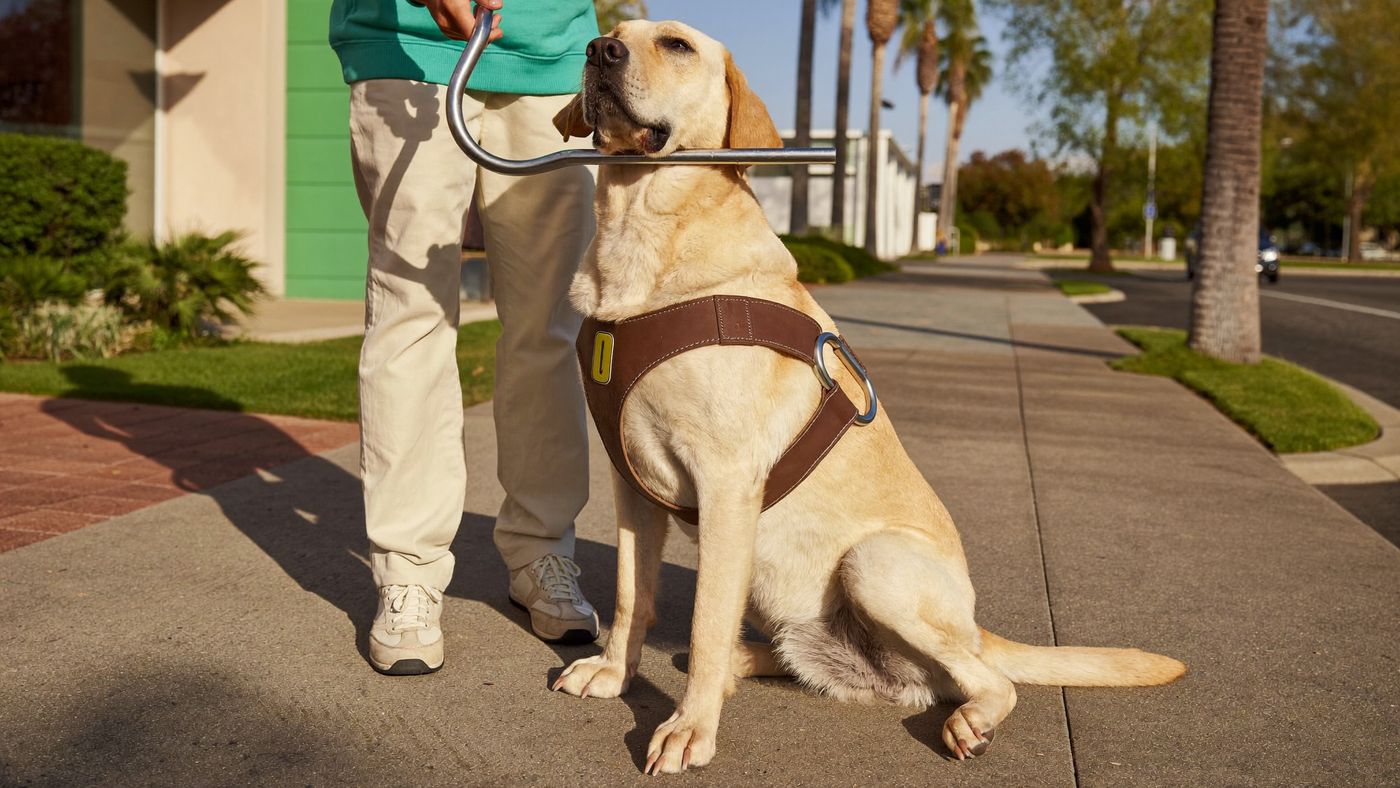
Detection is a different job with a different profile. Labradors dominate single purpose narcotics, explosives and cadaver work, because the nose is superb and a Labrador does not frighten a crowd at an airport. A dog is trained on drugs or on explosives, never both, for the obvious reason that the handler has to know what the alert means.
Training runs roughly fourteen to twenty weeks for patrol work and ten to sixteen for detection, and that is only the start. Handlers certify through bodies such as the United States Police Canine Association or NAPWDA, recertify on a schedule, and train continuously: commonly an hour every shift plus a full shift a week for the rest of the dog's working life.
The selection rate is the number that puts all of this in perspective. Only a small fraction of dogs of any breed pass. Departments are screening for drive, trainability, nerve strength, physical soundness, and an off switch. The last one eliminates more candidates than people expect, including many dogs their owners describe as exceptional.
Cigo
If you want to understand this job rather than the idea of it, the story is local.
On Christmas Eve 2018, Palm Beach County Sheriff's Office deputies were dealing with a suspect near the Mall at Wellington Green. The man ran. Deputies deployed K-9 Cigo, a three year old German Shepherd. The suspect fired as he ran and hit the dog. Cigo was taken to an animal hospital and died there.
His handler was Deputy Ryan Soriano. They had been partners for about a year.
The sheriff's office held a memorial service. Cigo's name is recorded on the Officer Down Memorial Page among the K-9s killed in the line of duty.
We mention it because Wellington is one of the towns we walk in, and because the distance between a training video and this is the whole distance of the profession. The dog goes first. That is the function. Every handler signs up knowing it, and it happens often enough that Florida keeps a list.
What to do with the dog you have
Here is the useful part, and it is not a consolation prize.
Your dog cannot be a police dog. Your dog can absolutely do real work, and some of that work is harder to get into than police K-9 and matters just as much.
Search and rescue. Volunteer SAR teams train and certify handler-owned dogs for wilderness search, disaster work, water search and human remains detection. Teams work with emergency management and get called out for real missing person cases. The commitment is years, the standards are serious, and the dog is yours.
Detection sport and scent work. Competitive nosework builds exactly the skills that matter, and it will tell you honestly whether your dog has the drive people think it has.
IGP, formerly Schutzhund. The protection sport that police selection borrows its vocabulary from. Titling a dog in it is a genuine credential and it is the closest legitimate version of what most people picture.
Therapy and courthouse facility work. A different temperament entirely, and in demand.
Any of these gives you something a K-9 aspirant cannot fake in an interview: documented evidence that you can train a dog to a standard set by somebody else.
What to prepare, concretely
Your record. A background investigation is exhaustive. Credit, driving, employment, social media, everything. Problems do not have to be criminal to end an application.
Your fitness, measured. Not gym fitness. Academy standards, on a stopwatch, before you apply.
Documents. Birth certificate, Social Security card, driver's license, high school diploma or GED and any college transcripts, military DD-214 if applicable. Agencies want originals and they want them fast when they ask.
Ride-alongs. Most departments offer them. Do several, at different agencies, on night shifts. It is free, it tells you more than any article, and it puts your face in the building.
Then say the word "K-9" out loud in the interview, and expect to be told it is years away. Say it anyway. Units notice who asked early.
The honest summary
You and your dog cannot enrol together. That door does not exist, and the reason is liability rather than merit.
What exists is a longer road: academy, certification exam, hiring, patrol, decoy work, an internal application, a house with the right fence, and eventually a dog the agency chooses and pays for. Handlers who do it describe it as the best assignment in policing, and they are usually not describing the excitement. They are describing the animal.
And your shepherd, meanwhile, does not have to sit idle. Search and rescue teams in this state are short of good handlers with fit dogs, and they will take you both.
Requirements differ between agencies and change over time. Everything here points at published sources, but the department you want to work for is the only authority on its own hiring, so call their recruiting office and ask.
Discussion
Questions get answered here. Reading is open to everyone.
Every comment is read by an automatic check before it appears. Phone numbers, emails and offers of pet care go to a moderator instead of the page.
Sign in to join the discussion. Reading is open to everyone; posting, replying and voting need an account, which keeps the comments answerable to a real person. Sign in or create an account
- Nobody has said anything yet. If the article left a question open, ask it here and we will answer.