
Service dog, ESA or pet: what each gets you in Florida
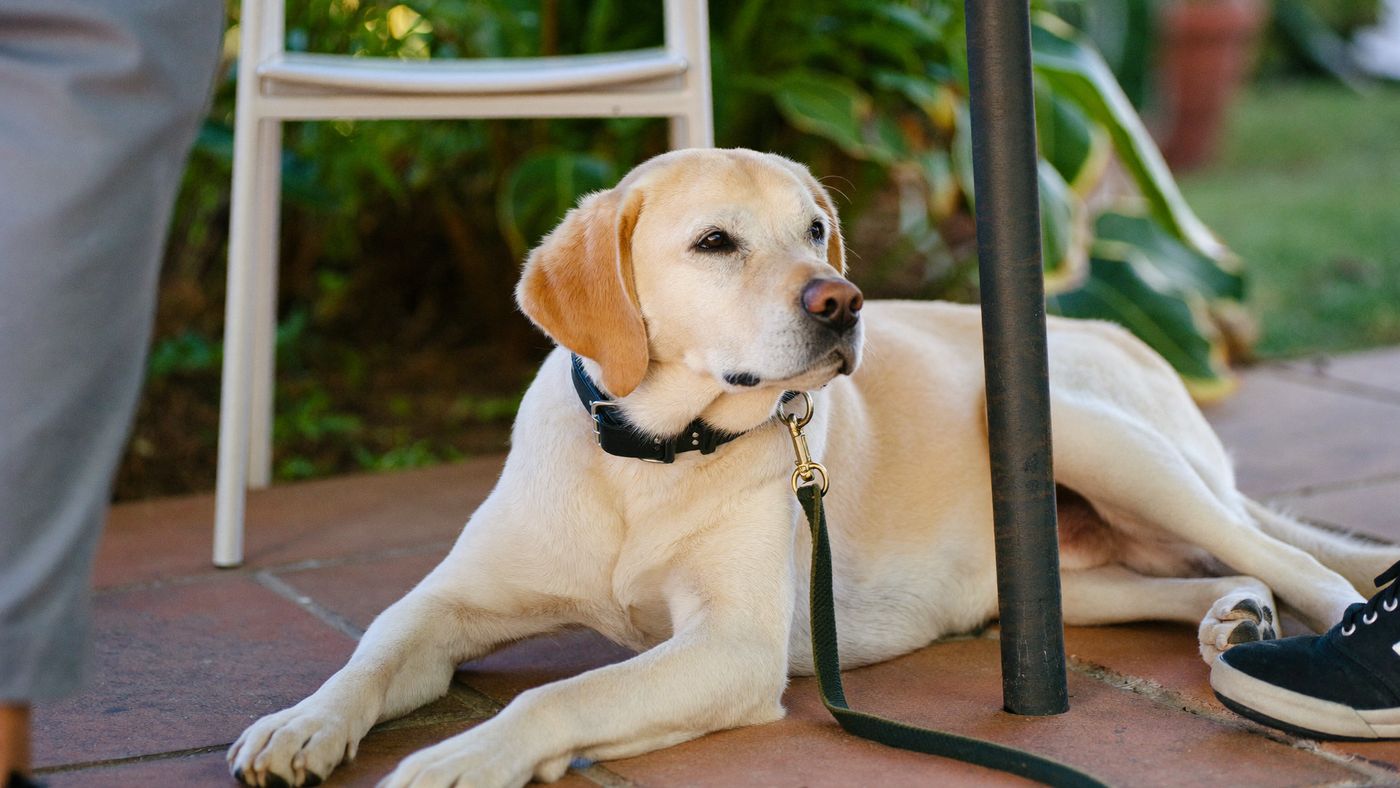
Not every dog with a job title has one under the law. Florida and federal rules recognize exactly one working category in public places, and the two other labels people use every day, emotional support animal and pet, come with far less than most owners expect.
The line is training, not paperwork
Under the ADA (28 CFR 36.104), a service animal is "any dog that is individually trained to do work or perform tasks for the benefit of an individual with a disability." The same regulation closes the door on everything else: "The crime deterrent effects of an animal's presence and the provision of emotional support, well-being, comfort, or companionship do not constitute work or tasks for the purposes of this definition." ada.gov says it plainly about comfort animals: "Because they have not been trained to perform a specific job or task, they do not qualify as service animals under the ADA."
Florida follows the same logic. Fla. Stat. 413.08(1)(d) states "A service animal is not a pet," limits the term in public accommodations to a dog or a miniature horse, and repeats the comfort exclusion word for word. Florida does spell out psychiatric tasks as qualifying work (interrupting impulsive behavior, reminding a person to take medication, calming someone during a PTSD episode), so a trained psychiatric service dog counts.
An emotional support animal is defined somewhere else entirely, in Fla. Stat. 760.27(1)(a), as an animal "that does not require training to do work, perform tasks, provide assistance." That phrase is the whole difference.
In a store, a restaurant, a hotel
A service dog goes where the public goes. Under 28 CFR 36.302(c)(7) that means all areas open to customers, including places with a no-pets policy. Staff may ask only two questions: is the dog a service animal required because of a disability, and what work or task has it been trained to perform. They may not ask about the disability itself or demand a demonstration. They may not require documents either: "Covered entities may not require documentation, such as proof that the animal has been certified, trained, or licensed as a service animal, as a condition for entry." Online certificates and registries "do not convey any rights under the ADA," and the Department of Justice does not recognize them. No vest, no ID card, no surcharge (36.302(c)(8), and Fla. Stat. 413.08(3)(c) says the same about deposits). A business may still charge for actual damage if it charges everyone for damage.
A service dog can be asked to leave only if it is out of control and the handler does not act, or if it is not housebroken. Florida adds direct threat to that list and states flatly: "Allergies and fear of animals are not valid reasons for denying access."
An ESA gets none of this in public. Neither does a pet. A restaurant, pharmacy, salon, or hotel that says no is following the law, not discriminating. Florida does allow dogs on restaurant patios, but only where a local government has passed an ordinance under Fla. Stat. 509.233 and the specific establishment holds a permit, with leash, sanitation, and signage rules attached.
In housing, the ground moved
Housing is where an ESA has traditionally meant something, and where 2025 and 2026 changed the picture. HUD withdrew its 2020 assistance animal notice on September 17, 2025, stating those documents "should not be relied upon by internal or external parties." On May 22, 2026, HUD went further: "I am permanently rescinding FHEO's 2020 notice regarding assistance animals." The new enforcement standard is that HUD "will find reasonable cause and recommend charges only for those cases involving animals trained to provide disability-related assistance."
The Fair Housing Act itself did not change, and HUD noted that nothing in the guidance affects a person's right to file a private lawsuit in federal or state court within two years of a violation. Not all housing is covered anyway: 42 U.S.C. 3603(b) exempts a single-family home sold or rented by an owner with no more than three such homes and no broker, and owner-occupied buildings of four units or fewer.
Florida's own statute still stands. Under 760.27 a tenant may not be charged extra compensation for an ESA, and a landlord may deny one that is a direct threat. If the disability is not obvious the landlord may ask for reliable supporting information, from a licensed practitioner with personal knowledge (an out-of-state provider counts only if they "provided in-person care or services to the tenant on at least one occasion"), and may require proof of licensing and vaccination. What a landlord cannot do: ask for a diagnosis, the severity of the disability, or medical records; demand a specific notarized form; or accept an internet registration as sufficient, since 760.27(3)(c) says a card, patch, or certificate from the Internet "is not, by itself, sufficient information." Service animals in housing fall under 413.08(6)(b) instead, where vaccination proof may be requested and the owner pays for damage.
On a plane
Air travel has its own rulebook, and it narrowed in 2020. Under 14 CFR 382.3, a service animal is "a dog, regardless of breed or type, that is individually trained to do work or perform tasks for the benefit of a qualified individual with a disability," and the regulation names the exclusions directly: other species, emotional support animals, comfort animals, companionship animals, and service animals in training "are not service animals for the purposes of this part."
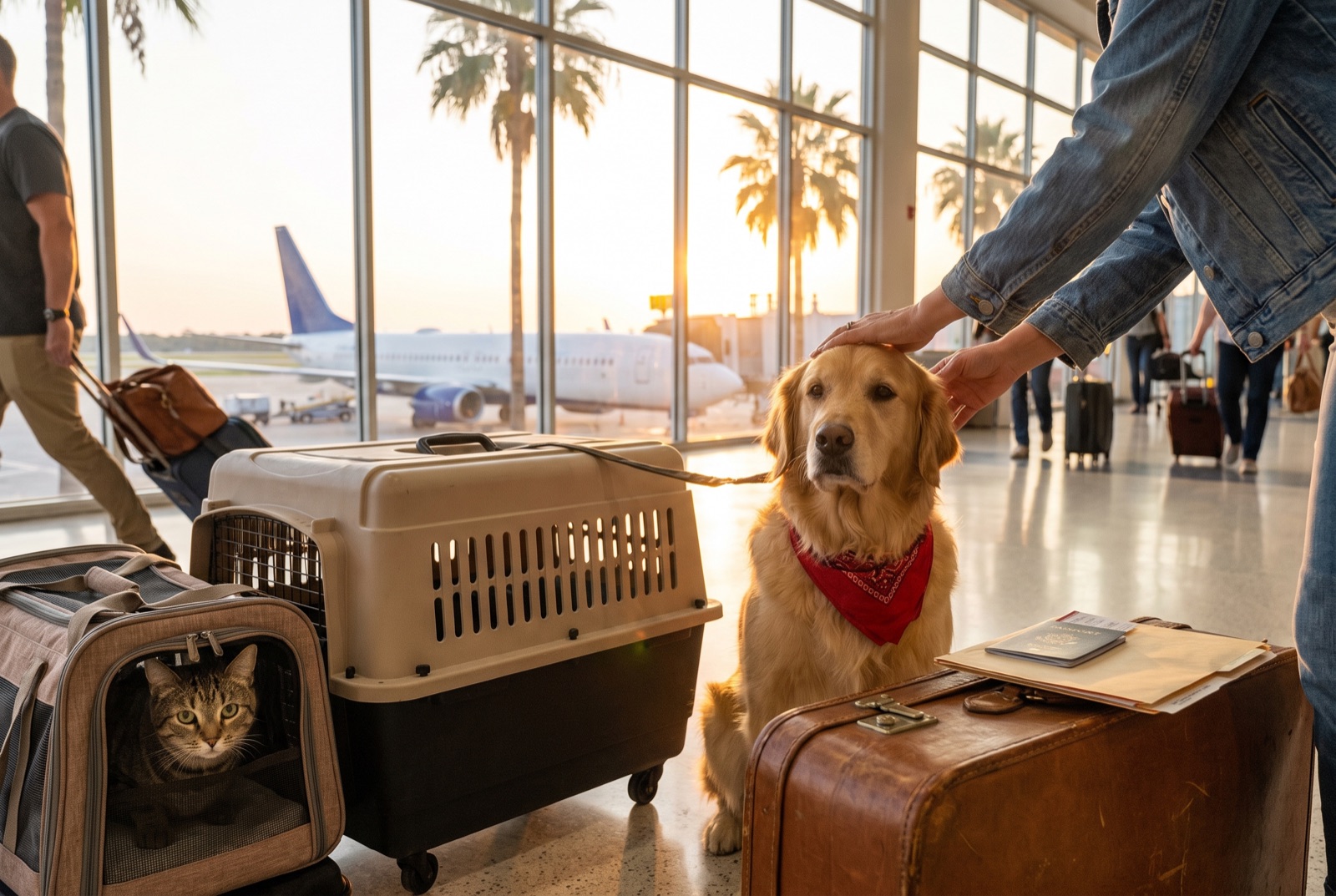
An airline may require the DOT Service Animal Air Transportation Form, and for flights of eight hours or longer a relief attestation form as well. Nothing beyond that. If you booked more than 48 hours out, the form can be demanded 48 hours ahead; book closer than that and you hand it over at the gate. Airlines cannot refuse a dog by breed, cannot force you to check in at the counter instead of online, and need not accept more than two service animals per passenger. An ESA or a pet flies under the carrier's pet policy, in a carrier, for a fee, or not at all.
Rideshare
Uber's policy defines a service animal as one "trained to work or perform tasks for an individual with a disability" and states there are no exceptions "due to allergies, religious objections, or a generalized fear of animals." About ESAs, Uber tells drivers the opposite: "you may complete or deny the trip at your own discretion." Lyft requires drivers to accommodate service animals regardless of allergies or fear, deactivates drivers who refuse, and warns riders that misrepresenting a pet risks account deactivation.
What Florida does to people who fake it
Fla. Stat. 413.08(9) covers anyone who "knowingly and willfully misrepresents herself or himself, through conduct or verbal or written notice, as using a service animal." That is a misdemeanor of the second degree, punishable under s. 775.082 or s. 775.083, plus 30 hours of community service for an organization serving people with disabilities, to be completed within six months.
Faking an ESA has its own statute. Fla. Stat. 817.265 covers false or fraudulent proof of need for an emotional support animal, with the same misdemeanor classification and the same 30 hours within six months.
The penalty runs both directions. Under 413.08(4) a business that denies access or service to a person with a service animal commits a second degree misdemeanor and owes the same 30 hours.
Can a business ask to see my service dog's certification?
No. Staff may ask two questions only, and the ADA bars requiring documentation, training proof, or licensing as a condition of entry.
Does a vest or ID card give my dog any rights?
No. Gear is optional under the ADA and Florida law, and online registrations carry no legal weight in either.
Can my emotional support animal fly in the cabin with me?
Not as a service animal. Federal air rules count only individually trained dogs, so an ESA travels under the airline's regular pet policy.
Is a landlord still required to accept an ESA in 2026?
Florida's statute has not been repealed, but HUD now enforces only for trained animals, so the practical route runs through a private court action rather than a HUD complaint.
If the dog stays home, the day still works
A pet dog closed out of a restaurant, a flight, or an apartment showing is an inconvenience, not a dead end. A midday walk, a drop-in visit, or a sitter covers the hours you are gone, and around Palm Beach County that is usually the simpler answer than arguing about categories at a doorway. The honest version, dog at home with someone looking after it, costs less trouble than the dishonest one.
This is general information about how the rules are written, not legal advice. Statutes get amended and federal guidance moves, sometimes fast. For your own situation, whether that is a landlord dispute, an airline denial, or a business that turned you away, talk to a Florida attorney or contact the agency named in the rule that applies.

Discussion
Questions get answered here. Reading is open to everyone.
Every comment is read by an automatic check before it appears. Phone numbers, emails and offers of pet care go to a moderator instead of the page.
Sign in to join the discussion. Reading is open to everyone; posting, replying and voting need an account, which keeps the comments answerable to a real person. Sign in or create an account
- Nobody has said anything yet. If the article left a question open, ask it here and we will answer.