
Large dog breeds that actually handle Florida heat
· 38 views
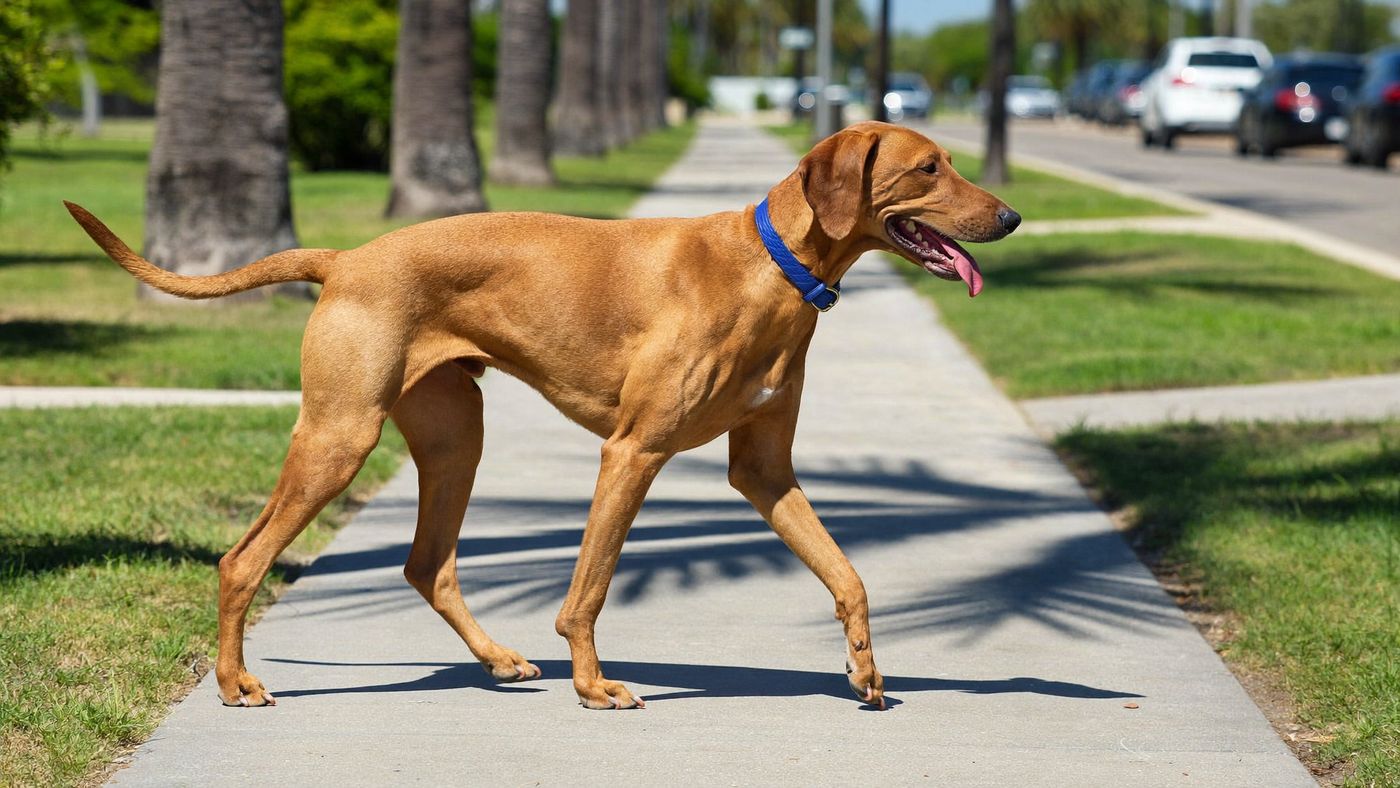
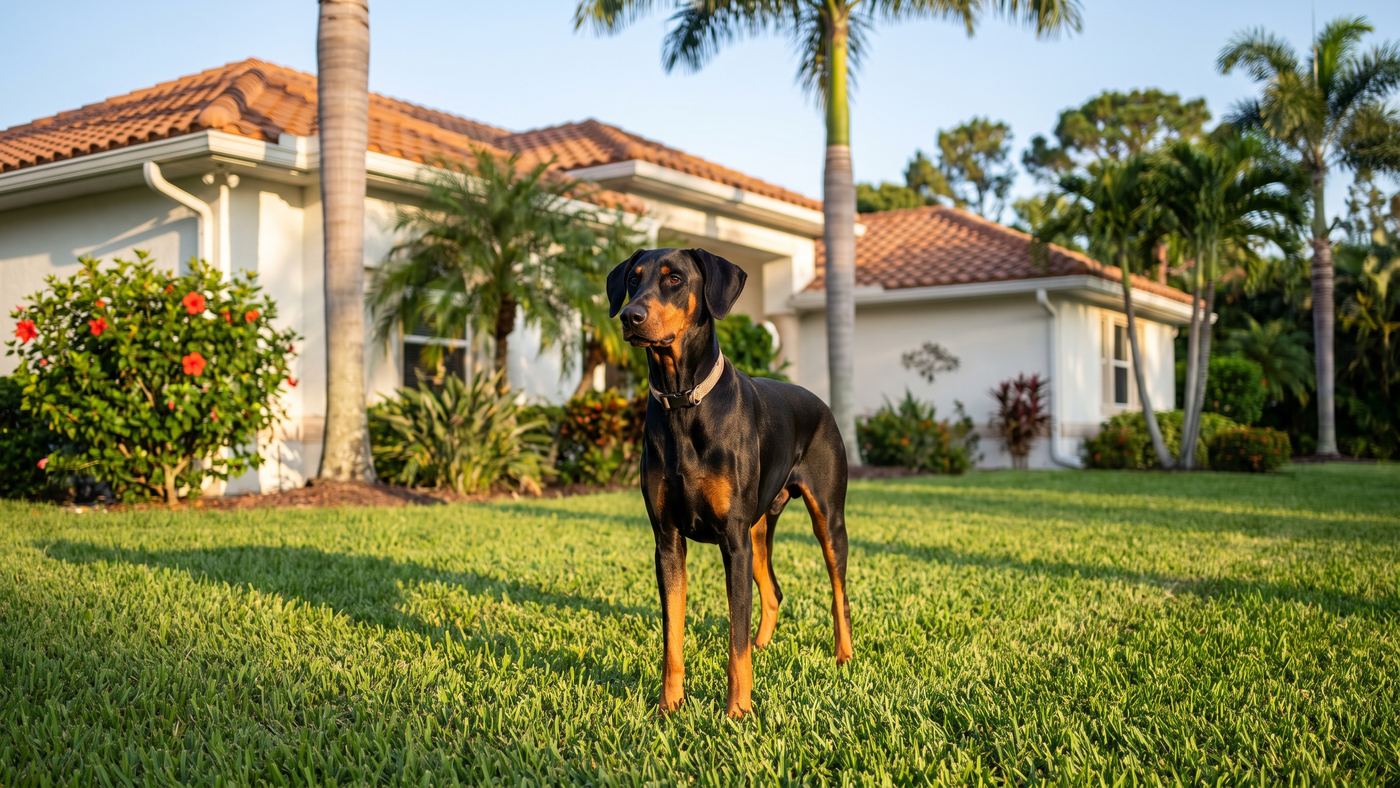
Large dog breeds thrive in Florida if their bodies are built for the heat, not against it. Short coats, long muzzles, and efficient panting matter more than size. Doberman Pinschers, Hungarian Vizslas, Great Danes, Rhodesian Ridgebacks, German Shorthaired Pointers, and Weimaraners fit this profile. Their airways are open, not compressed, so heat leaves the body through panting the way it should.
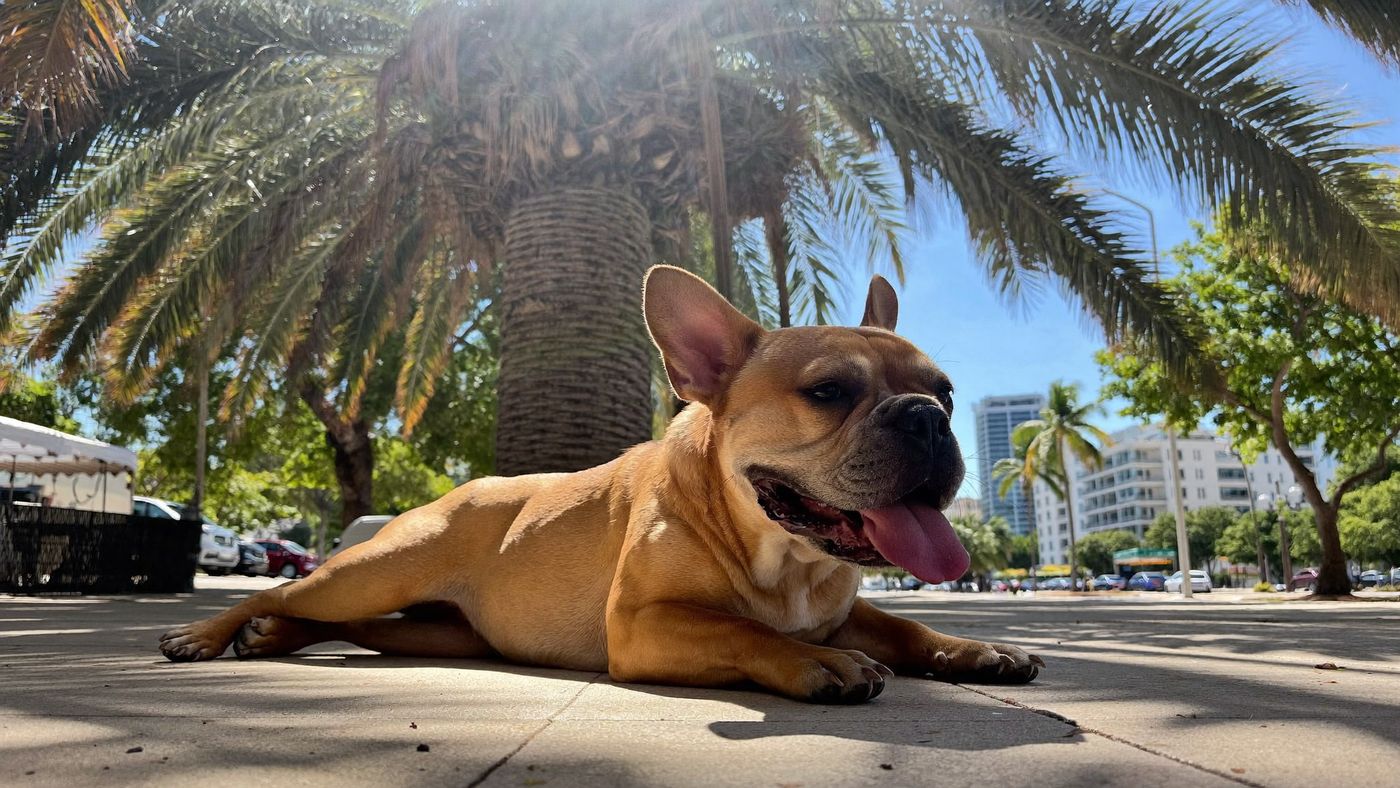
Compare that to a French Bulldog. RVC and Nottingham Trent researchers found bulldogs face 14 times the heat exhaustion risk of Labradors. The shortened skull that gives brachycephalic breeds their look also blocks the airflow that would normally cool them down. A Doberman or a Vizsla doesn't carry that structural handicap.
Why these six breeds handle it better
Doberman Pinschers, Weimaraners, Great Danes, Rhodesian Ridgebacks, German Shorthaired Pointers, and Vizslas share the same basic build. Short coats, long muzzles, and heat dissipation that actually works. A short coat doesn't trap heat against the skin. A long muzzle keeps air moving in and out during exertion, instead of choking it off the way a compressed skull does. None of them carry the structural handicap that puts a French Bulldog at risk.
None of that makes them immune. A large-breed dog moving fast in direct sun still generates heat quickly, and Florida's humidity works against every dog's cooling system. Panting cools blood through evaporation, and evaporation slows dramatically once the air is already saturated with moisture. That's the mechanism behind why a humid 88°F day can be tougher on a dog's body than a dry 95°F day out west.
At what temperature does heat risk start for a dog in South Florida?
Heat exhaustion risk starts around 75°F with high humidity and becomes dangerous past 80°F. South Florida clears those marks on ordinary summer days, not just during heat waves.
Why is humid Florida heat harder on a dog than dry heat elsewhere?
Panting cools a dog through evaporation, and evaporation slows once the air is already full of moisture. That's why a humid 88°F day in Florida can be tougher on a dog's body than a dry 95°F day out west.
Is a heat-tolerant breed still at risk during a normal walk?
Local vets, including [Boca Midtowne Animal Hospital](https://bocamidtownevet.com/which-dogs-face-the-highest-risk-of-heat-stroke/), report dogs arriving for heat-related emergencies from ordinary summer activity, not extreme conditions. Build in water breaks and don't judge risk by how "hot" the day feels to you.
What's the safest daily schedule for these breeds in South Florida?
Morning and evening exercise windows, with midday reserved for rest indoors or in shade. Risk climbs fastest during the hours of strongest sun, even for a dog built to handle heat.
The daily schedule matters as much as the breed. Morning and evening walks avoid the sun's peak intensity, while midday belongs indoors or in shade regardless of how heat-tolerant the dog is on paper. In Boynton Beach, Intracoastal Park at 2240 N Federal Hwy gives leashed dogs room to move along the water, useful for a morning or evening outing. For off-leash time, Jaycee Dog Park, Officer Joseph Crowder Dog Park, and Mangrove Dog Park cover the area, all worth checking for shade cover before a midday visit. Boynton Beach ZIP codes include 33424, 33425, 33426, 33435, 33436, and 33437.
A large, heat-adapted breed is a genuine advantage for anyone building a life around outdoor time in South Florida. Just remember that adaptation reduces risk, it doesn't remove it. Water, shade, and a schedule built around the sun's angle still do the real work.
Discussion
Questions get answered here. Reading is open to everyone.
Every comment is read by an automatic check before it appears. Phone numbers, emails and offers of pet care go to a moderator instead of the page.
Sign in to join the discussion. Reading is open to everyone; posting, replying and voting need an account, which keeps the comments answerable to a real person. Sign in or create an account
- Nobody has said anything yet. If the article left a question open, ask it here and we will answer.