Bulldogs, pugs and boxers: the Florida summer schedule
The temperature math
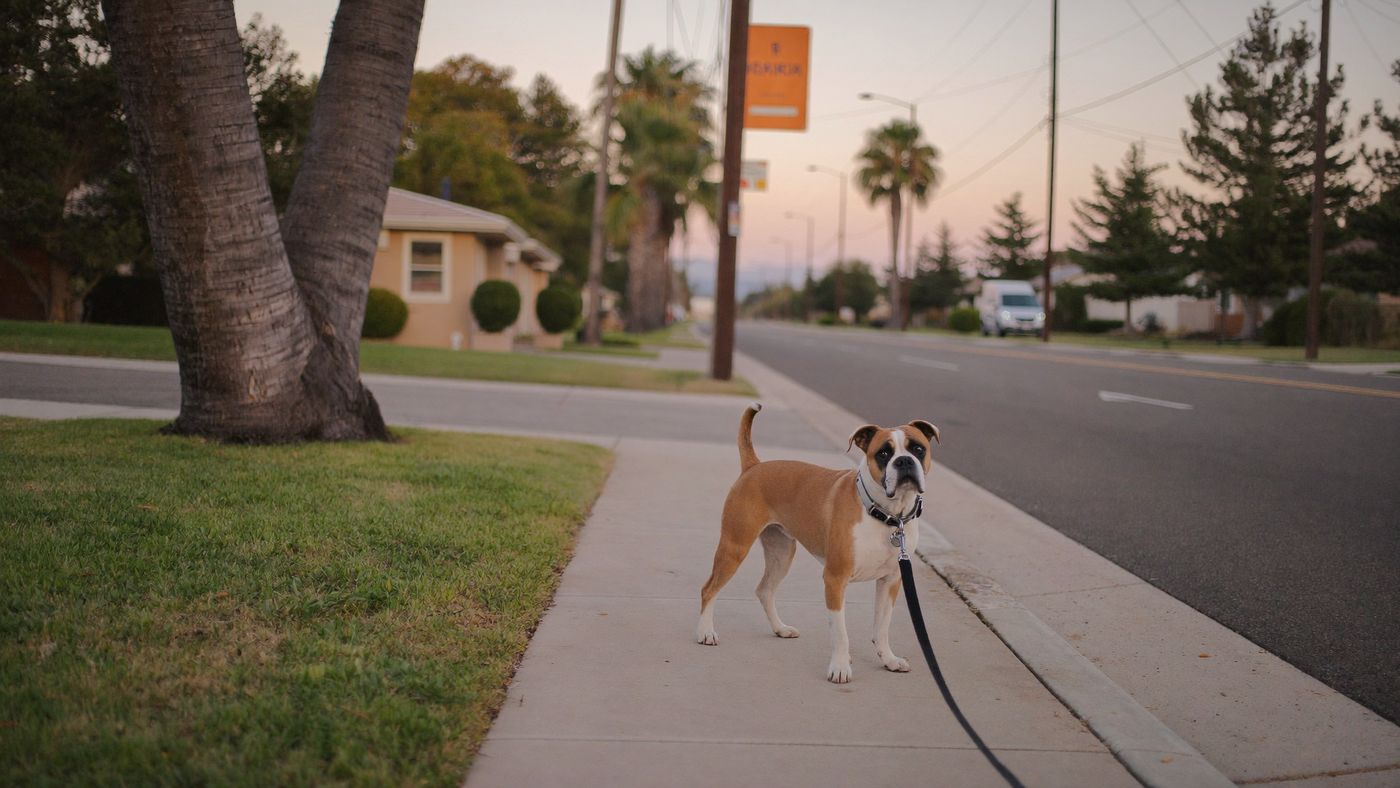
Bulldogs, pugs and boxers don't overheat on the worst days of the year. They overheat on ordinary Tuesdays, during a normal walk, at a normal hour. Boca Midtowne Animal Hospital, which published its own list of the breeds most at risk, sees it locally: dogs land in the ER not during freak heat spikes but during routine summer activity that would barely register for a Labrador.
The reason is anatomy, not bad luck. Dogs cool themselves mainly through panting, moving air across the wet surfaces of the tongue, throat and airway to evaporate moisture and shed heat. That system depends on airflow. French Bulldogs, English Bulldogs, pugs, boxers and cane corsos all share a shortened skull and a narrower airway, so less air moves per breath no matter how hard the dog works at it. A Nottingham Trent and Royal Veterinary College study puts a number on the gap: bulldogs face 14 times the risk of heat exhaustion that Labradors face, same weather, same walk.
Two thresholds matter more than the number on your phone's weather app.
Risk starts at 75°F with high humidity. That's not a heat advisory day. That's an ordinary summer morning here. Above 80°F, conditions turn genuinely dangerous for brachycephalic breeds, and an ordinary Florida summer afternoon clears that mark without trying.
Humidity is the part people underestimate. Evaporative cooling, the whole basis of panting, barely functions when the air is already saturated with moisture. An 88°F day at high humidity can be harder on a bulldog's body than a dry 95°F day out west, because the dog's airway can't offload heat into air that's already full of water vapor. Florida's humid heat changes the math in a way a dry-climate thermometer reading never shows.
Build the schedule around it, not the day
The fix isn't skipping walks all summer. It's shortening them and adding more of them, timed to the coolest windows of the day, early morning before the humidity builds and after sunset once the pavement and air have both cooled. Pavement holds heat long after the air temperature drops, so a walk that feels comfortable to you in the evening can still be too hot for paw pads and for a dog laboring to breathe near the ground.
Short and frequent also gives you more chances to read the dog before anything goes wrong, rather than committing to one long stretch and hoping it holds. If a bulldog stalls, ignores a favorite corner, or slows for no obvious reason mid walk, that's the signal to turn around, not the signal to push further toward a landmark.
What are the first signs of overheating in a bulldog or pug?
Heavier panting than usual, slowing down or stopping on a walk they'd normally finish, and seeking shade or lying down. This stage responds fast to moving indoors and offering water.
What's the next stage, and how is it different?
Bright red or purple gums and tongue, thick drool, unsteady walking, or a dog that seems dazed. This is heat exhaustion progressing, and it needs immediate cooling and a vet call, not a wait and see approach.
What should I do the moment I notice early signs?
Stop the activity, get the dog into shade or air conditioning immediately, and offer small amounts of water. Don't wait for symptoms to escalate before treating it as urgent, brachycephalic dogs can go from panting to crisis faster than other breeds.
Does age or fitness change the risk?
The anatomy is the limiting factor for every French Bulldog, English Bulldog, pug, and boxer regardless of age or condition, since the airway itself restricts airflow. A fit adult bulldog still carries the 14x risk profile relative to a Labrador in the same conditions.
Boxers and cane corsos get less attention in this conversation than French Bulldogs, but the same shortened airway puts them in the same risk category. If your household has any brachycephalic breed, the short-frequent-walk schedule applies across the board, not just to the smallest or the most obviously flat-faced dog in the house.
Discussion
Questions get answered here. Reading is open to everyone.
Every comment is read by an automatic check before it appears. Phone numbers, emails and offers of pet care go to a moderator instead of the page.
Sign in to join the discussion. Reading is open to everyone; posting, replying and voting need an account, which keeps the comments answerable to a real person. Sign in or create an account
- Nobody has said anything yet. If the article left a question open, ask it here and we will answer.