
Gold, silver and safety: a jeweler on dog jewelry in Florida
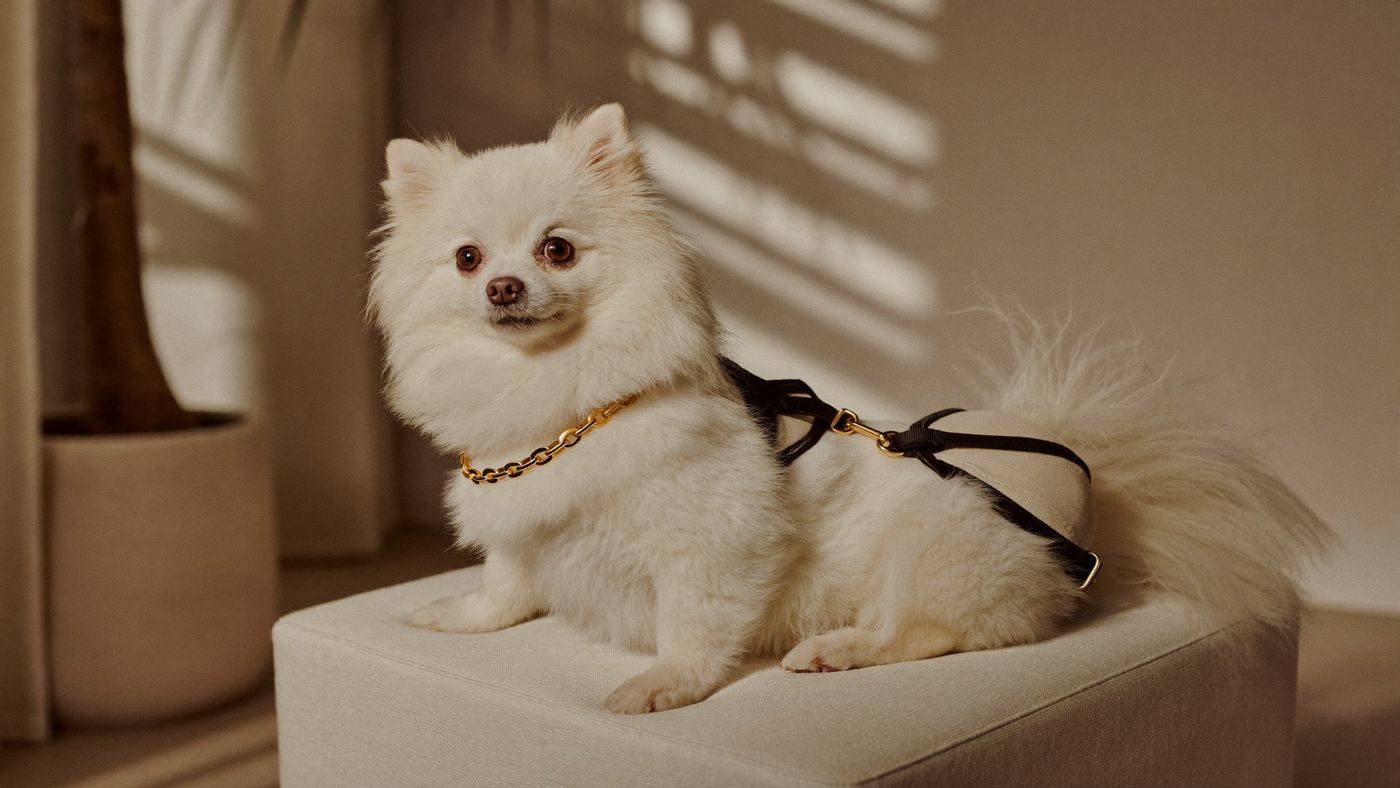
Dog jewelry is its own category in South Florida. Walk Worth Avenue or Atlantic Ave on a Saturday and you will pass gold chains, crystal collars and engraved pendants that cost more than the leash, the bed and the crate combined. Whether any of it is safe is a fair question, and it is not really a fashion question. It is a materials and engineering one.
So we asked someone who makes jewelry for a living. Arina Damaeva is a jeweler. She agreed to walk us through what precious metals actually do on a dog, and where the real risks sit. The short version of her answer: yes, gold is fine, and no, the chain should never be the thing your leash clips to.
The first thing people get wrong
dogoboca: Someone buys a heavy gold chain for their dog. What is your first question to them?
Whether they plan to walk the dog on it. That single question separates a piece of jewelry from a piece of equipment, and people mix the two constantly because a Cuban link looks strong enough to tow a car.
A collar is hardware. It carries an ID tag, sometimes it takes the leash, and its construction is rated for a certain mechanical load. A decorative chain has a different job. It should sit loosely around the neck, not press on the trachea, not pull hair, and not catch on things. Those are not the same object, and treating one as the other is where dogs get hurt.
The safest setup for a dog with real jewelry is boring and it works: a proper harness for the leash, and the beautiful thing worn separately.
dogoboca: How loose is loose enough?
Use the fit rule the American Kennel Club gives for collars. For a large breed you should be able to slide two fingers between the neck and the band. For a small dog it is one finger. If you can fit more, it is too loose, and loose is its own hazard: AKC describes dogs getting a leg looped through a slack collar while scratching, which can break a limb.
The risk that is not the metal
dogoboca: What is the most dangerous thing about dog jewelry?
Not gold. Not silver. Geometry and circumstance.
Anything worn around a neck can catch. AKC documents dogs strangling on collars caught on fences, and a puppy that died when an older dog got its lower jaw hooked in the puppy's buckle collar during ordinary play. The risk rises with three things: time spent in a crate wearing it, wrestling with other dogs, and anything in the yard a link can hook onto. That is exactly why breakaway collars exist, and it applies with more force to a rigid chain, which does not give at all.
So my rules are simple. Take the jewelry off for sleep, for crate time, for rough play with other dogs, for swimming and for bathing. Never let a chain function as a slip lead that tightens under tension. Links should be smooth and rounded so they do not pinch skin or trap long coat. Large charms need to be mounted so the dog cannot chew one off and swallow it. And on a puppy, re-measure often, because a neck changes fast.
Gold, silver, platinum
dogoboca: Can a dog wear real gold?
Yes, and gold has genuine technical advantages here. It resists corrosion, it does not rust, and it handles a humid, salt-heavy climate far better than cheap plating does. In South Florida that matters more than anywhere.
But 24 karat is a poor choice for a dog. Nearly pure gold is soft, and links deform, especially on an active animal. For a custom piece I would look at 14K or 18K. The 14K is tougher and more practical, the 18K carries more gold and reads richer, but it is softer.
Ask what is in the alloy. Some white gold alloys and cheap findings contain nickel. Contact dermatitis exists in dogs, and metals show up in the veterinary literature as possible contact allergens. I would not lecture anyone on the mechanism, but the practical rule is easy: if a dog starts scratching at the neck after a new piece goes on, and you see redness, irritation, crusting or hair loss exactly where the metal sits, take it off and see a vet.
dogoboca: And sterling silver?
Sterling 925 is a good way to own real jewelry for less, especially on a small dog. The catch in Florida is maintenance. Humidity, salt, grooming products and chlorine all accelerate tarnish. Take silver off before the pool, before the ocean and before a bath. I treat silver as a piece for a walk, a dinner patio, an event or a photo session, not as a twenty-four hour accessory.
dogoboca: Platinum is the prestige metal. Better?
Durable, yes. Rational, often no, because it is heavy. On a person a few extra grams on a thin chain disappear. On a Chihuahua, a Yorkie or a Pomeranian those grams are a meaningful load on the neck. In dog jewelry, more expensive is not automatically better. Low weight, correct geometry and a safe clasp beat the value of the metal every time.
Can I clip a leash to a gold chain if it looks strong?
No, unless the maker specifically rated that piece for the load. Use a harness for the leash and wear the chain as jewelry. A chain that tightens under tension is a choke, whatever it is made of.
What is the difference between solid gold, gold-filled and gold-plated?
Price and lifespan, by an order of magnitude. Solid gold is gold throughout. Gold-filled carries a bonded layer of real gold. Gold-plated is a thin coating over another metal, and gold-colored means no gold at all. Many pieces marketed with karat numbers in the name are plated or coated steel, which can be a perfectly sensible buy, just not the same thing.
Does a gold chain do anything for my dog's health?
No. There is no medical benefit. The usable value is an engraved tag with your phone number, a piece that survives the climate, and something that looks good in photos. The person who enjoys it most is the owner, and that is fine as long as the dog's comfort still wins.
How heavy is too heavy?
There is no scientific standard for pet jewelry weight, so no honest source can give you a percentage. The working rule is less is better, and it matters most on toy breeds.
What to ask before you buy
dogoboca: You know the trade. What should someone ask a jeweler who has never made anything for an animal?
Bring the dog's neck measurement and these questions:
- What exactly is the alloy, and does it contain nickel?
- What does the finished piece weigh?
- Are the links smooth and rounded, with nothing that can pinch skin or trap coat?
- Does the clasp open fast in an emergency, and does it stay closed the rest of the time?
- Is there a ring on this piece that will tempt someone to clip a leash to it, and can we leave it off?
- Can any charm be swallowed if the dog chews it loose?
A jeweler who makes human chains can absolutely make a good dog piece, but only if you say out loud that it is for an animal and that low weight and a safe clasp outrank everything else. That conversation is the whole job.
dogoboca: Design the ideal piece for us.
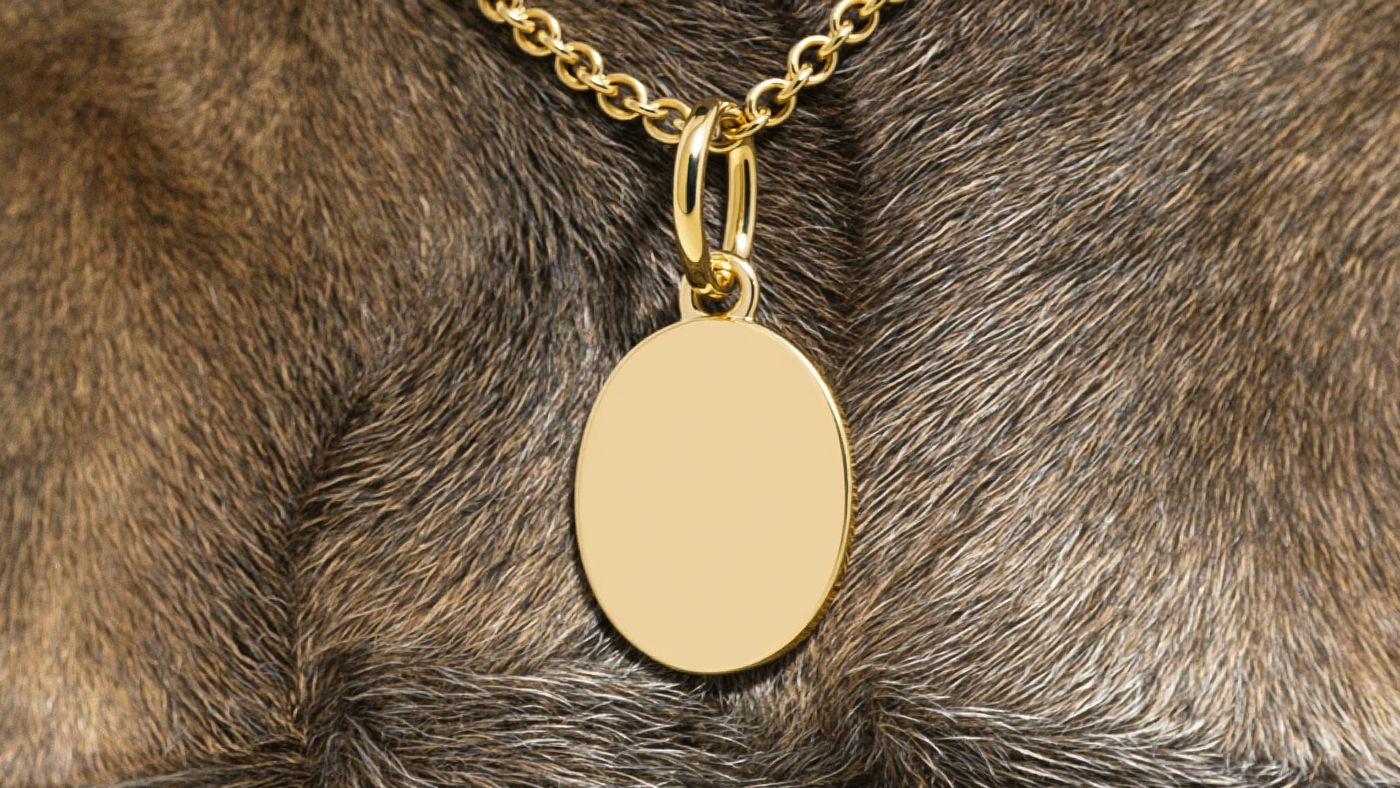
A relatively light 14K or 18K chain with wide, smooth links and rounded edges. A clasp that is secure but opens quickly. No leash ring at all, so nobody is tempted. Instead of an enormous lock, a small center plate engraved with the name. For a premium version, one small, well-set stone rather than dozens of protruding elements. It can keep the Miami Cuban look and still be built for a dog.
The Florida part
dogoboca: Anything specific to this climate?
Beach means salt and sand. Pool means chlorine. High humidity means skin and coat stay damp longer under a wide piece of metal, and that is worth avoiding in a place this warm. Sun heats metal surfaces.
So do not turn an expensive chain into a twenty four hour accessory. Jewelry for the walk or the event, plain functional gear for the beach and the water. After salt air, wipe the piece with a soft, slightly damp cloth and dry it completely.
One legal note
There is no special regime in Florida law for dog jewelry. Ordinary animal care requirements still apply, and cities and counties set their own licensing rules. Florida requires rabies vaccination for dogs from four months of age, with limited exceptions (Fla. Stat. 828.30). A diamond tag is a lovely addition to everyday gear, but do not treat it as a replacement for whatever identification or registration your county or city actually requires. This is general information, not legal advice.
Where the jewelry actually earns its keep
A piece like this looks its best in exactly one situation: good light, outdoors, on a dog that is relaxed. That is also what our free park photo sessions are, so if there is a chain in the house that mostly lives in a drawer, a session is the reason to bring it out. Bring the harness too. Walk the dog on the harness, wear the chain for the frames, and the dog never has to carry gold and tension at the same time.
Luxury should stay comfortable. As Arina puts it: engineering first, then design and price. The best piece of jewelry for a dog is not the heaviest one or the one with the most stones. It is the one the animal barely notices, that does not stop it moving, breathing, playing or resting, and that still looks like real jewelry.

Discussion
Questions get answered here. Reading is open to everyone.
Every comment is read by an automatic check before it appears. Phone numbers, emails and offers of pet care go to a moderator instead of the page.
Sign in to join the discussion. Reading is open to everyone; posting, replying and voting need an account, which keeps the comments answerable to a real person. Sign in or create an account
- Nobody has said anything yet. If the article left a question open, ask it here and we will answer.