
A week alone with an automatic feeder: what goes wrong
· 37 views
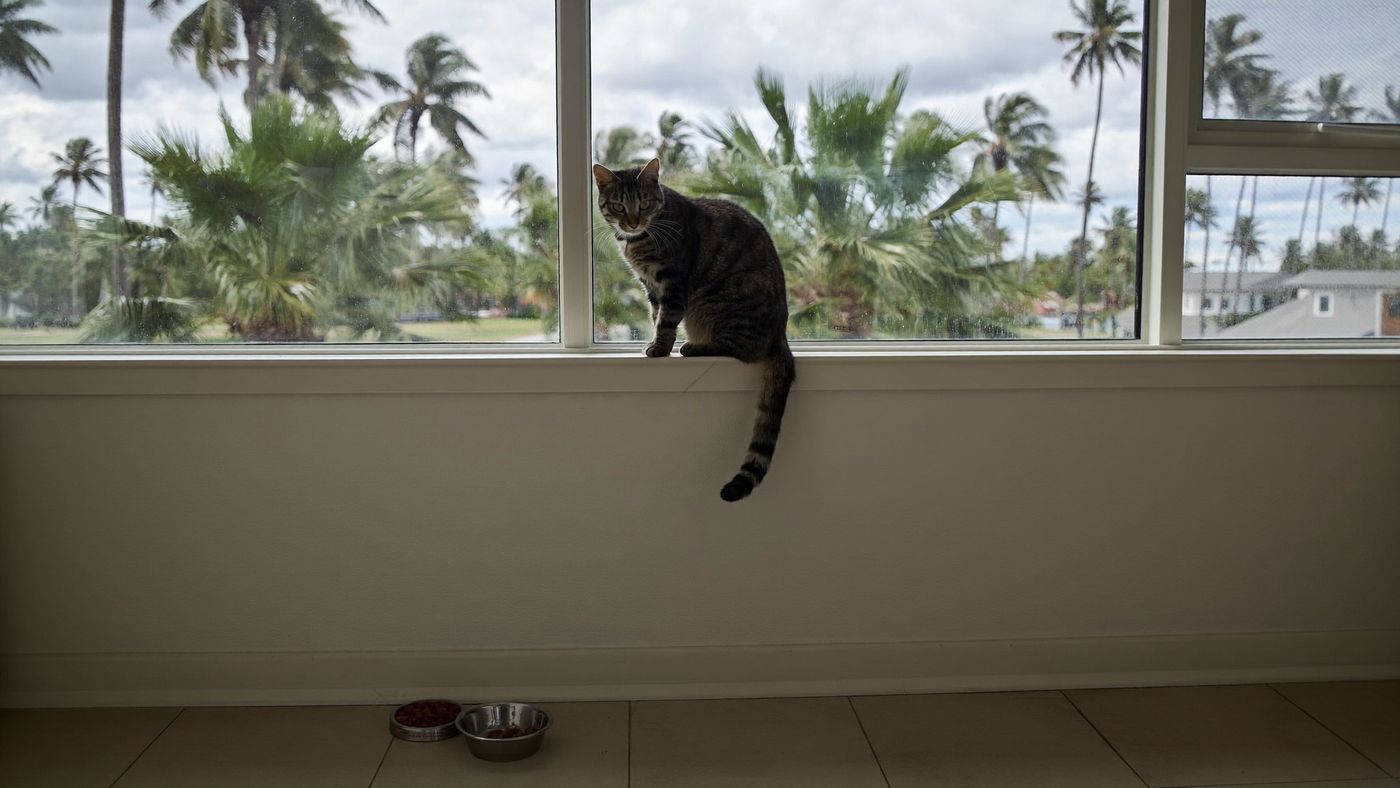
The plan is always the same. A feeder loaded with a week of kibble, the biggest water bowl in the house, two litter boxes instead of one, and a cat who never acts like she cares whether anyone is home. Seven days later the owner walks in and something is off. A cat who will not come out from under the bed, and a corner of the rug that smells wrong.
A cat's whole world is the place she already lives in: her windows, her smells, her spot on the back of the sofa. So a week away comes down to one question. Who comes through the door while you are gone?
The feeder solves one problem out of five
An automatic feeder is a machine that drops kibble on a timer, and that is all it is. Batteries drain and meals get missed until someone is there to fix it. Sensitive cats get startled by the noise and skip meals even when they are hungry.
The feeder also does not scoop the box. It does not change the water, which ASPCA says should be washed and refilled daily. It does not notice that the food dropped and nobody touched it. And it cannot see a cat making trips to the box at 2 a.m. with nothing to show for them.
The sources split on how long a cat can be alone. Cats Protection, the British national cat charity, puts the maximum at around 12 hours. American veterinary blogs say 24. No US veterinary association publishes a number at all.
Day two: nobody knows the bowl is still full
Cornell Feline Health Center states that anorexia "can have a severe impact on a mature cat's health if it persists for as little as 24 hours." In Cornell CatWatch, Sharon Center, DVM, professor of internal medicine at Cornell, gives a flat rule: if your cat has stopped eating for 24 to 36 hours, make a veterinary appointment.
Dr. David Williams of the University of Illinois College of Veterinary Medicine writes that a cat who goes several days without eating risks hepatic lipidosis, in which the liver cannot handle the flood of fat released from the body's stores and packs it into itself instead. Illinois lists jaundice, lethargy, weakness and vomiting as signs, with not eating for multiple days as the main warning.
A sitter is not a veterinarian. What a person in the room twice a day does is notice on day one that the bowl is untouched.
Day three to five: the box
Ohio State's Indoor Pet Initiative says most cats avoid a dirty box in favor of a cleaner place, and that place "may turn out to be your carpet, bed, or sofa." Scoop daily, wash weekly. The 2014 AAFP/ISFM house soiling guidelines put the baseline for a single cat home at two boxes in two locations.
Cats avoid what they associate with a bad experience, so one week of a full box can buy months of puddles by the sofa. The same guidelines note that a cat missing the box may be sick rather than annoyed, since cystitis and illness in general both show up as house soiling.
AVMA warns that straining in the box looks like constipation but "is more often a sign that the urethra is blocked." Cornell calls urethral obstruction a true medical emergency, and says the time from complete obstruction until death "may be less than twenty-four to forty-eight hours." Frequent trips, straining, almost no urine. Male cats between one and ten years old are at the highest risk. A person scooping every day sees the empty box that day, not at the end of the week.
How often does a cat need a visit?
Cats Protection recommends a sitter who visits at least twice a day, and says kittens, older cats and cats with health conditions need more.
My cat hides from strangers. Is a visit even useful?
Most of the value is observational: food eaten or not, water level, litter contents, whether she is in her usual spot. Our sitters are background checked and average eight years of working with animals, and meet and greets are free, so you can watch how she reacts before anything is booked.
What does a cat visit cost?
We run 30 minute cat visits at the same rate across [Boca Raton](/areas/boca-raton), Delray Beach, Boynton Beach, West Palm Beach, Pompano Beach and Deerfield Beach, and overnight sitting at your own address when a cat needs someone in the house. Current rates are on the service page.
Florida adds heat and power
Cornell says to keep cats indoors in air-conditioned areas when extreme heat is forecast, with fresh water always available. Neither Cornell nor AVMA publishes a safe indoor temperature in degrees.
The bigger variable is electricity. NOAA sets hurricane season from June 1 to November 30, which covers most of the summer travel calendar. After Irma in 2017, the Energy Information Administration recorded 6.7 million Florida customers without power, with 18 percent of the state still dark five days later.
Windows matter in a building with balconies. ASPCA documents high-rise falls causing shattered jaws, punctured lungs and broken limbs, and warns: "Do not rely on childproof window guards to protect your pets! Cats can slip through them." Sturdy screens on every window, checked before you leave.
What to leave behind
AVMA recommends authorizing someone in writing, with a document stating your wishes and your spending limit, and a copy to your veterinarian before you go. Cats Protection adds the rest: vet details, emergency contacts, enough litter, food and medication, and where the carrier is kept.
A cat left alone is not lonely the way a dog is. She is unobserved. That is a different problem, and it has one fix: a person in the room with eyes on her.



Discussion
Questions get answered here. Reading is open to everyone.
Every comment is read by an automatic check before it appears. Phone numbers, emails and offers of pet care go to a moderator instead of the page.
Sign in to join the discussion. Reading is open to everyone; posting, replying and voting need an account, which keeps the comments answerable to a real person. Sign in or create an account
- Nobody has said anything yet. If the article left a question open, ask it here and we will answer.